
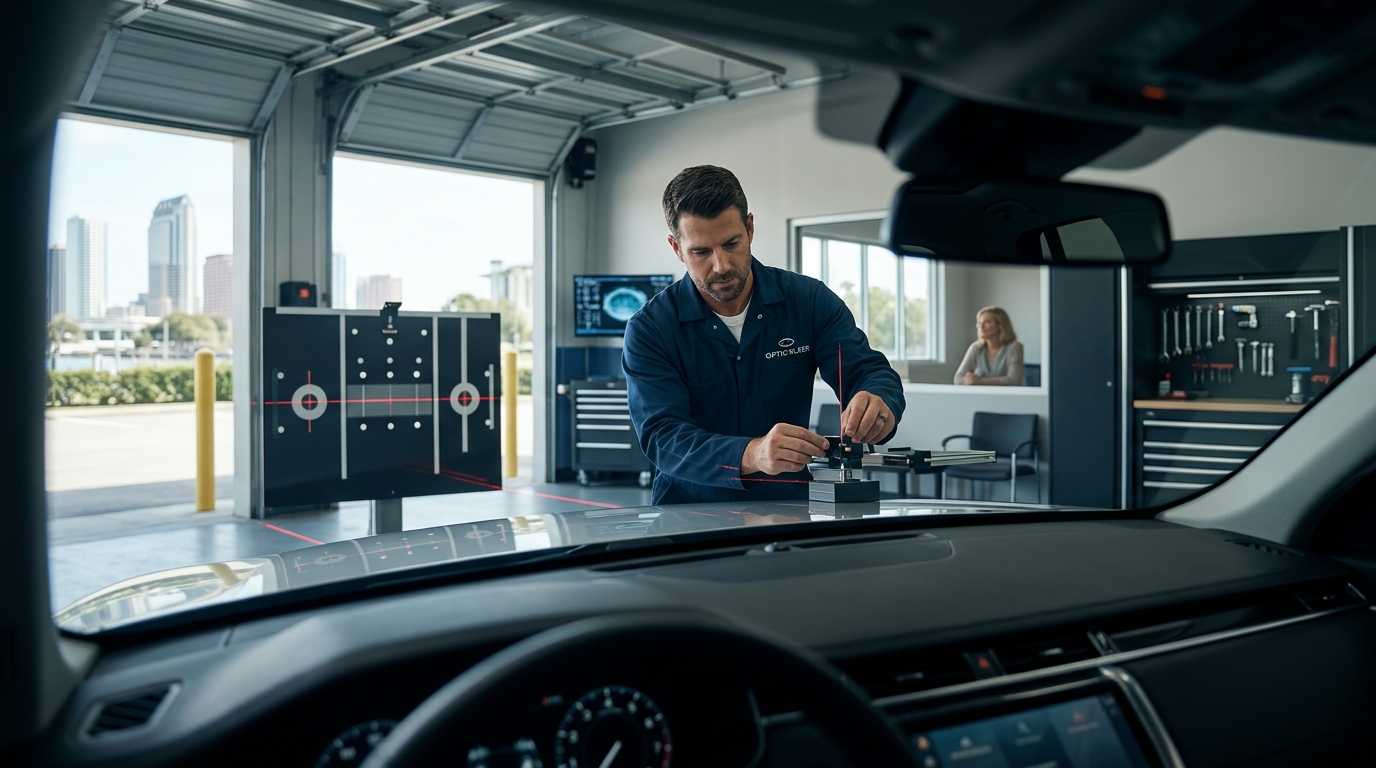
Modern vehicles rely heavily on Advanced Driver Assistance Systems (ADAS) to maintain safety and operational efficiency. According to the Insurance Institute for Highway Safety, vehicles equipped with ADAS features experience significantly fewer crashes than those without. However, these systems depend entirely on the precise alignment of cameras and sensors mounted on the windshield. If the glass is replaced without proper recalibration, the system may fail to detect obstacles, leading to dangerous driving conditions. This guide outlines the critical steps to ensure your ADAS system functions correctly after a windshield replacement. (About Us Optic Kleer)
Understanding ADAS Dependency on Windshield Position
ADAS calibration is the process of aligning the vehicle's safety sensors with the manufacturer's specifications. ADAS is a system of safety features that assist the driver in avoiding or mitigating collisions. These features include lane departure warnings, adaptive cruise control, and automatic emergency braking. The forward-facing camera, which is typically mounted behind the rearview mirror, requires a specific angle to interpret road data accurately. (Optic Kleer)
When a windshield is replaced, even a millimeter of deviation can cause the camera to misinterpret lane markings or distance to other vehicles. This misalignment can result in the system failing to activate when needed or triggering false alarms. Therefore, recalibration is not optional; it is a mandatory safety procedure. According to the National Highway Traffic Safety Administration, proper sensor alignment is critical for the effective operation of these life-saving technologies.
Step 1: Comprehensive Vehicle Assessment
The first step in ensuring proper calibration is a thorough diagnostic assessment of the vehicle. Technicians must identify which ADAS features are present in the specific make and model. Not all vehicles require the same calibration procedures. Some systems rely solely on the forward camera, while others utilize radar sensors located in the grille or bumpers.
During this phase, the technician will scan the vehicle's computer system for any existing error codes related to the camera or sensor modules. This diagnostic step helps determine if the sensors were already misaligned before the glass replacement. It also establishes a baseline for the calibration process. If the vehicle has been in a previous collision, the frame alignment must be verified to ensure the sensor mounting points are correct.
Step 2: Precision Glass Installation
Accurate windshield installation is the foundation of successful ADAS calibration. The new windshield must be positioned exactly according to the manufacturer's tolerances. Even if the calibration equipment is perfect, a poorly installed windshield will result in incorrect sensor alignment.
Technicians use specialized tools to measure the position of the glass relative to the vehicle's frame. The adhesive used to bond the glass must be applied correctly to prevent shifting during the curing process. According to the Auto Glass Safety Council, proper installation techniques are vital to maintaining the structural integrity of the vehicle and the accuracy of the ADAS sensors. Any deviation in the glass position will require the calibration process to compensate, which may not be possible if the error is too large.
Step 3: Static Calibration Procedures
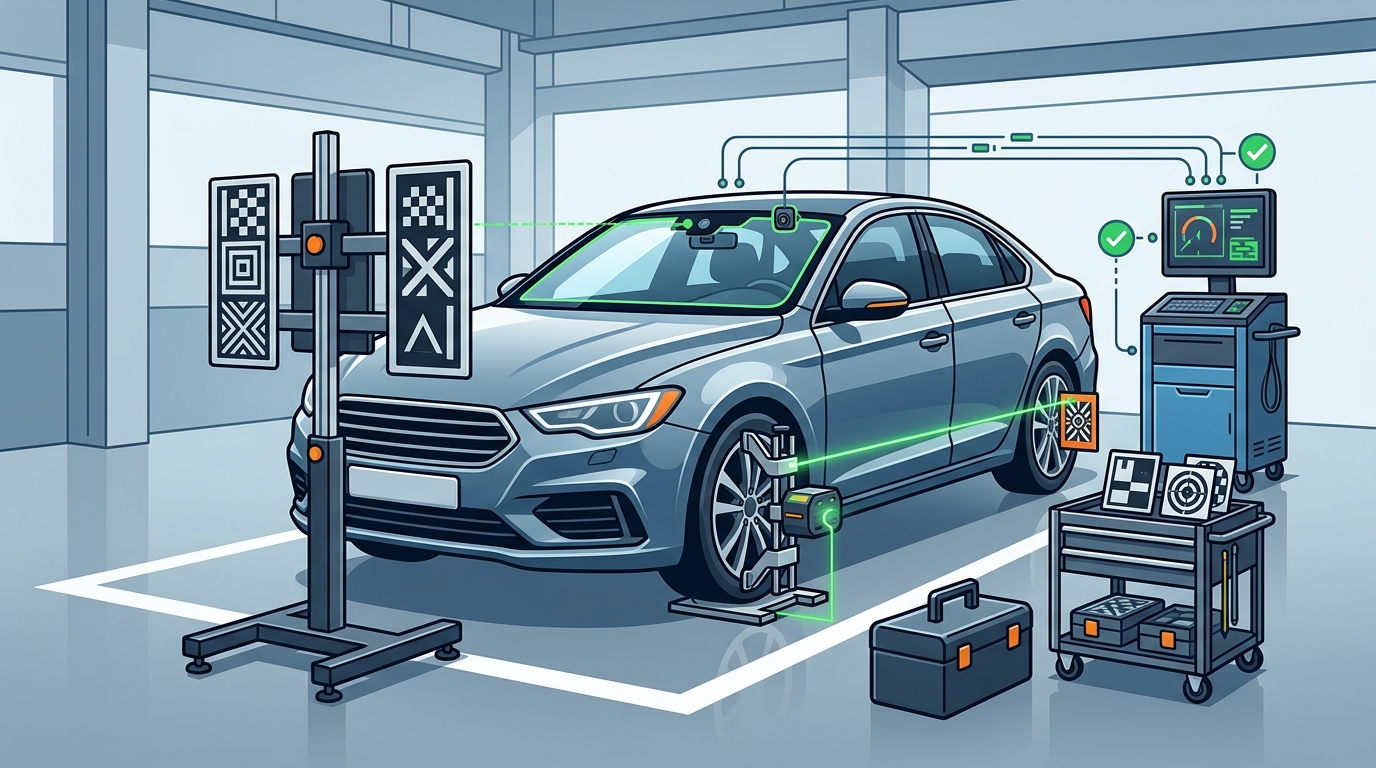
Static calibration is performed while the vehicle is stationary. This method requires a specialized calibration target or board that is positioned at a specific distance and angle from the windshield. The target mimics the road conditions and lane markings that the camera would normally see.
The technician connects a diagnostic tool to the vehicle's onboard computer. The tool guides the camera to adjust its internal settings to align with the calibration target. This process ensures that the camera's view is perfectly centered and level. Static calibration is often used for cameras that do not require movement to verify alignment. It is a precise process that requires high-quality equipment and trained expertise.
Step 4: Dynamic Road Calibration
Dynamic calibration involves driving the vehicle on a designated course to verify sensor alignment in real-world conditions. This method is required for systems that use radar or lidar sensors, or for cameras that need to be calibrated while in motion. The vehicle is driven at specific speeds, and the system is monitored for accuracy.
During the dynamic test, the technician observes how the system responds to lane markings and other vehicles. The data is recorded and compared against manufacturer specifications. If the system performs within the acceptable range, the calibration is complete. If not, further adjustments are made. According to the Society of Automotive Engineers, dynamic calibration is essential for ensuring that ADAS features function correctly under various driving scenarios.
Step 5: Post-Calibration Verification
The final step is a rigorous verification of all ADAS features. The technician will test each safety system to ensure it operates as intended. This includes checking lane departure warnings, adaptive cruise control, and automatic emergency braking. The goal is to confirm that the system detects obstacles and lane markings accurately.
A final diagnostic scan is performed to clear any error codes and confirm that the calibration data has been saved to the vehicle's computer. The technician provides documentation of the calibration process, including the data logs and verification results. This documentation is crucial for warranty purposes and future service records. Proper verification ensures that the vehicle is safe to drive and that the ADAS systems are fully functional.
Key Takeaways
- ADAS is a system of safety features that assist the driver in avoiding or mitigating collisions. These features rely on precise sensor alignment.
- Optic-Kleer® calibrates your ADAS system meaning you and your family are safe. Professional calibration ensures your technology performs exactly as designed.
- Static calibration uses a target board to align the camera while the vehicle is stationary.
- Dynamic calibration requires driving the vehicle to verify sensor performance in real-world conditions.
- Full documentation is provided after every calibration to certify successful completion.
- Technicians are trained and certified to the highest auto glass industry standards.
- Guaranteed accuracy is essential for the proper functioning of lane departure warnings and adaptive cruise control.
Frequently Asked Questions
Do all windshields require ADAS calibration?
Not all windshields require calibration. Only vehicles equipped with ADAS features that use the windshield-mounted camera or sensors need recalibration. If your vehicle has lane departure warnings or adaptive cruise control, it likely requires calibration.
How long does ADAS calibration take?
The calibration process typically takes between one to two hours, depending on the vehicle make and model. Static calibration may be faster, while dynamic calibration requires additional time for road testing.
Can I drive my car immediately after calibration?
Yes, you can drive your car immediately after calibration is complete and verified. However, you should avoid harsh braking or sudden maneuvers for the first few miles to allow the system to fully initialize.
What happens if ADAS is not calibrated?
If ADAS is not calibrated, the safety features may not function correctly. This can lead to false alarms, failure to detect obstacles, or incorrect lane departure warnings, increasing the risk of an accident.
Does Optic-Kleer offer mobile ADAS calibration?
Yes, Optic-Kleer offers mobile services for many ADAS calibrations. Our technicians are equipped with the necessary tools to perform static and dynamic calibrations at your location.
Is ADAS calibration covered by insurance?
Insurance coverage for ADAS calibration varies by policy. Some comprehensive or collision policies may cover the cost, while others may not. It is best to check with your insurance provider.
How often should ADAS be recalibrated?
ADAS should be recalibrated every time the windshield is replaced. It may also need recalibration after a collision or if the vehicle's suspension is modified.
Schedule Your Calibration
Ensure your vehicle's safety systems are functioning correctly. Contact Optic-Kleer today to schedule your ADAS windshield calibration. Our certified technicians are ready to provide expert service at your convenience. Visit our Find Your Location page to find the nearest service center.