
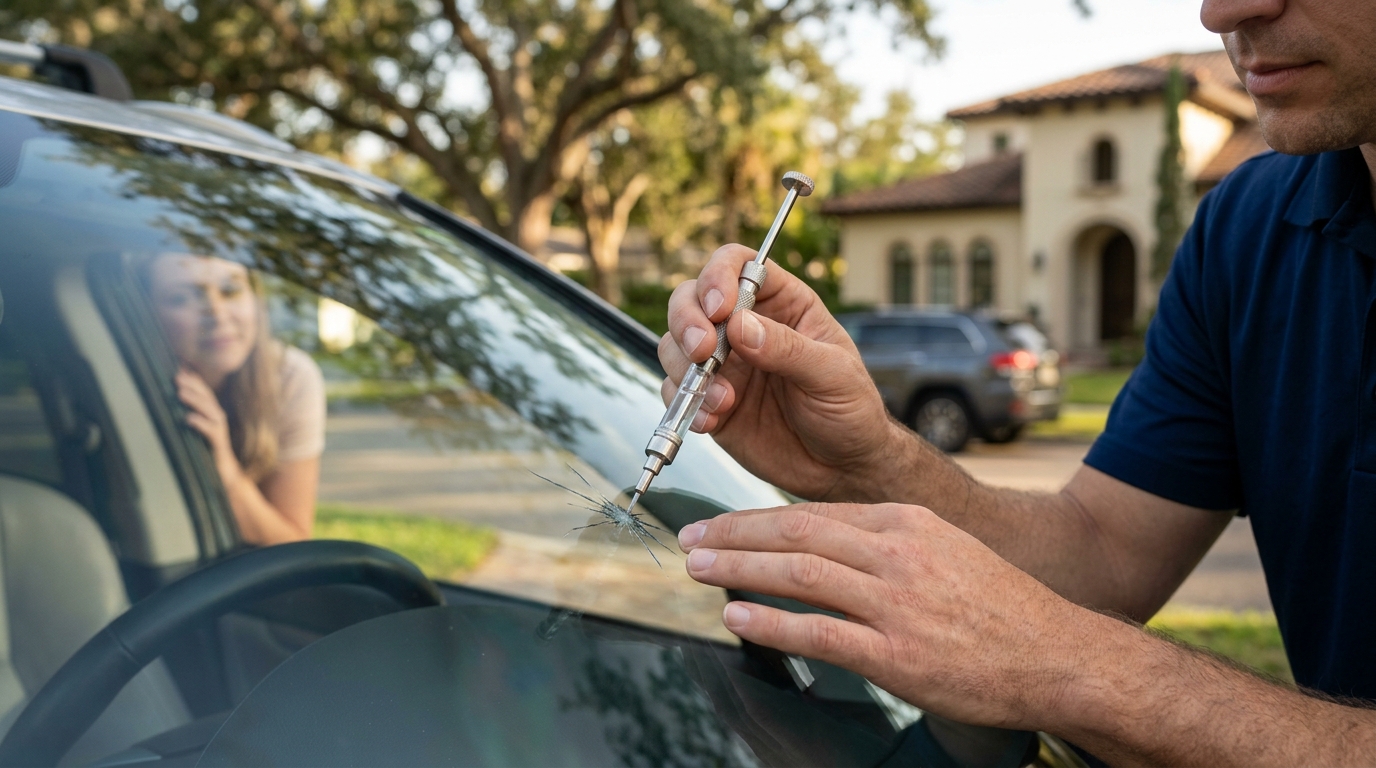
Windshield damage is a critical safety and visibility issue that demands immediate attention. According to the National Highway Traffic Safety Administration, even minor glass fractures can compromise the structural integrity of your vehicle's cabin. The most effective method for repairing small windshield chips involves using a high-quality resin injection kit or professional mobile service to restore optical clarity and prevent crack propagation. Ignoring these small defects often leads to costly full replacements and potential ADAS system misalignment. (About Us Optic Kleer)
Understanding Chip Types and Repairability
Not all windshield damage is created equal. Before attempting any repair, you must identify the specific type of damage. Industry data from auto insurance experts indicates that repairability depends heavily on the size, depth, and location of the fracture. Small chips, typically under one inch in diameter, are prime candidates for successful restoration. Larger cracks or those in the driver's direct line of sight often require full replacement for safety compliance.
Bullseye Chips
A bullseye chip is a circular fracture caused by a round object, like a stone, hitting the glass. These are highly repairable because the resin can be injected evenly into the center point. The circular nature allows for uniform pressure distribution during the curing process.
Star Breaks
Star breaks feature a central impact point with radiating cracks resembling a star. While more complex than bullseyes, small star breaks can still be repaired effectively. The key is ensuring the resin penetrates all radiating fissures to stop further spreading.
Combination Breaks
These occur when two different types of chips overlap. Repairing combination breaks is challenging and often requires professional assessment. If the cracks extend beyond a quarter-inch, replacement is usually the safer and more cost-effective option.
DIY Repair Kits vs. Professional Service
When deciding how to fix a chip, you have two primary paths: do-it-yourself kits or professional mobile service. Each method has distinct advantages depending on your technical skill and the severity of the damage.
DIY Repair Kits
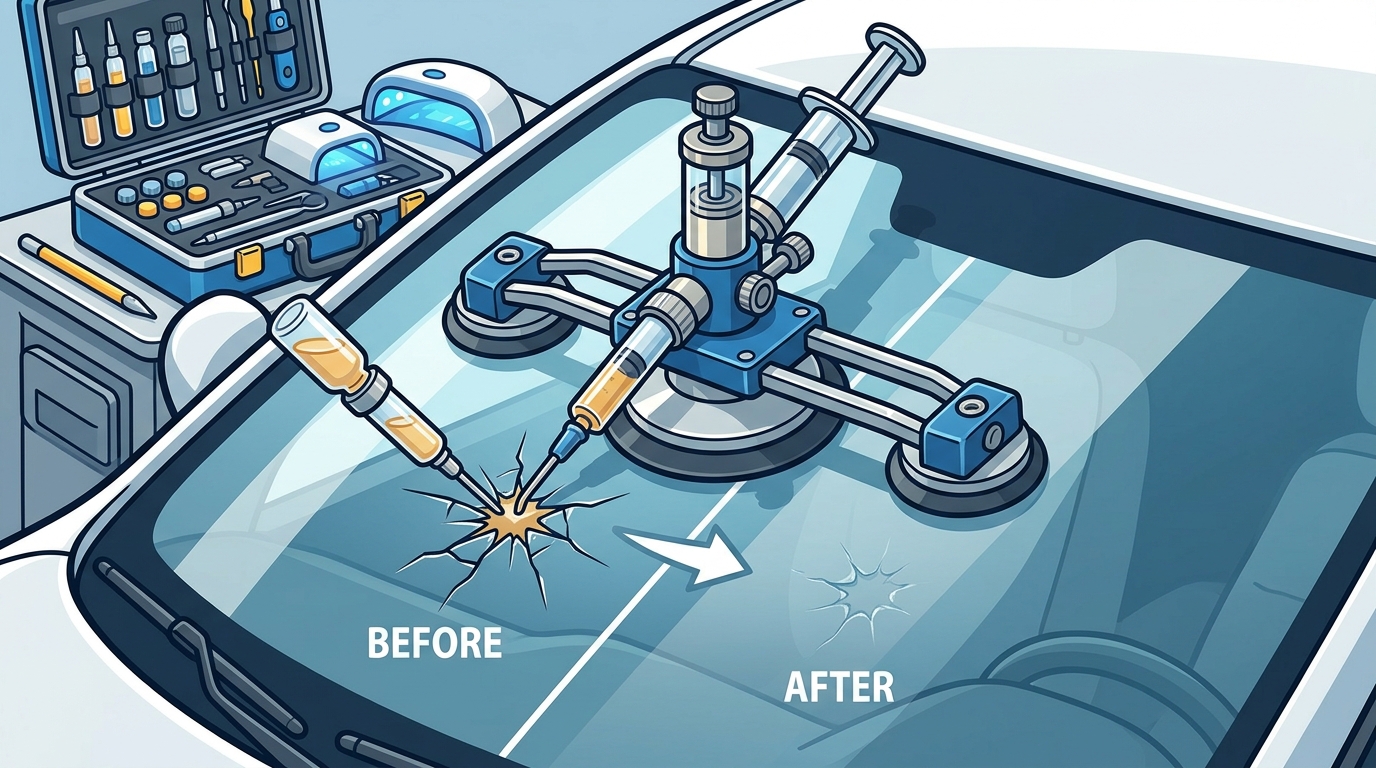
DIY kits are widely available at auto parts stores and online. They typically include a suction cup bridge, resin syringe, and curing film. These kits are cost-effective for immediate, minor chips. However, they require a steady hand and a clean environment to work. Dust or moisture during application can ruin the repair, leaving visible bubbles or haze.
Professional Mobile Service
Professional services, such as those offered by Optic Kleer, utilize industrial-grade vacuum pumps and high-clarity resins. Technicians are trained to assess the glass structure and determine the optimal injection angle. Mobile service brings this expertise to your home or workplace, eliminating the need for you to drive a compromised vehicle to a shop.
Comparison of Repair Methods
| Feature | DIY Repair Kit | Professional Mobile Service |
|---|---|---|
| Cost | $10 - $30 | $50 - $100 (often covered by insurance) |
| Convenience | Requires self-driving to store | Technician comes to you |
| Success Rate | Variable based on skill | High, with industry certification |
| Warranty | Limited or none | Lifetime warranty on workmanship |
| ADAS Impact | None addressed | Calibration assessment included |
The Resin Injection Process Explained
The core of effective chip repair is the resin injection process. This method involves filling the void left by the broken glass with a specialized ultraviolet-curing resin. The goal is to restore the glass's structural strength and optical clarity.
Step 1: Cleaning the Damage
Before any resin is applied, the chip must be thoroughly cleaned. Technicians use compressed air and specialized tools to remove loose glass particles and moisture from the fracture. This step is critical because any debris trapped inside will become permanently visible after the resin cures.
Step 2: Resin Injection
Using a vacuum pump, the technician creates a vacuum within the chip to pull out air. Then, high-pressure resin is injected into the void. The vacuum ensures that the resin penetrates deep into the micro-fractures of the inner glass layer. This bonding is what restores the structural integrity of the windshield.
Step 3: UV Curing
Once the resin fills the chip, it is exposed to ultraviolet light. The UV rays cause the resin to harden rapidly, bonding it to the surrounding glass. After curing, the excess resin is scraped away and polished to match the surrounding glass clarity.
The Critical Role of ADAS Calibration
Modern vehicles are equipped with Advanced Driver Assistance Systems (ADAS). These systems rely on cameras and sensors mounted near the windshield to function correctly. Research from the Insurance Institute for Highway Safety highlights that even minor windshield replacements or repairs can shift sensor alignment if not properly calibrated.
Why Calibration Matters
If your windshield is replaced or significantly repaired, the camera's perspective may change. This can lead to false alerts in lane departure warnings or failure to engage automatic emergency braking. Proper calibration ensures your safety features operate exactly as the manufacturer designed them.
Optic Kleer Calibration Services
At Optic Kleer, we provide certified ADAS calibration services. Our technicians use state-of-the-art equipment to verify that your vehicle's sensors are aligned to OEM specifications. This service is essential for maintaining the safety and functionality of your modern vehicle.
Complementary Glass Maintenance
While focusing on windshield repair, it is important to consider the overall health of your vehicle's glass. Foggy or yellowed headlights can reduce visibility by up to 50%. Consumer Reports data shows that regular headlight restoration is a simple yet effective way to improve night driving safety.
Optic Kleer offers professional headlight restoration services. This process removes oxidation and restores clarity to your headlights, ensuring you are seen and can see clearly. Combining windshield repair with headlight restoration provides a comprehensive approach to vehicle glass maintenance.
Key Takeaways
- Immediate Action: Repair small chips within 24 hours to prevent spreading and maintain insurance coverage.
- Repairability Limits: Chips larger than one inch or those in the driver's direct line of sight often require full replacement.
- Professional Advantage: Professional services offer higher success rates and lifetime warranties compared to DIY kits.
- ADAS Safety: Any windshield work may require ADAS recalibration to ensure safety systems function correctly.
- Insurance Coverage: Most comprehensive insurance policies cover windshield repair with little to no deductible.
- Mobile Convenience: Mobile technicians can perform repairs at your home or workplace, saving you time.
- Brand History: Optic Kleer has been repairing rock chips since 1991, establishing decades of industry expertise.
Frequently Asked Questions
How long does a windshield chip repair take?
A standard chip repair typically takes between 30 to 60 minutes. This includes cleaning, resin injection, curing, and polishing. Mobile service times may vary slightly based on weather conditions.
Will my insurance cover the cost of chip repair?
Most comprehensive auto insurance policies cover windshield repair with zero deductible. Optic Kleer works directly with all major insurance companies to streamline the claims process for you.
Can I drive my car after a chip repair?
Yes, you can drive immediately after the resin has cured. However, it is recommended to avoid car washes or high-pressure water on the repaired area for at least 24 hours to ensure the resin fully hardens.
What is the difference between a chip and a crack?
A chip is a small, localized break in the glass, usually caused by an impact. A crack is a longer fracture that extends across the windshield. Chips are generally repairable, while long cracks often require replacement.
Do you offer mobile windshield repair services?
Yes, Optic Kleer offers mobile service vans that operate out of centralized hub locations. We can service customers at their homes, workplaces, dealerships, and commercial facilities with no call-out fees.
Is ADAS calibration included in windshield repair?
ADAS calibration is typically required only if the windshield is replaced or if the camera's position is disturbed. For minor chip repairs, calibration is usually not necessary, but we can assess your vehicle's needs during the service.
How long does the resin last?
The resin used in professional repairs is designed to last the lifetime of the vehicle. It is UV-stable and resistant to temperature changes, ensuring long-term clarity and strength.
Schedule Your Windshield Repair Today
Do not let a small chip become a major safety hazard. Trust the experts who have been repairing rock chips since 1991. Contact Optic Kleer today to schedule your mobile windshield repair or ADAS calibration service. Our certified technicians are ready to restore your vehicle's safety and clarity.