
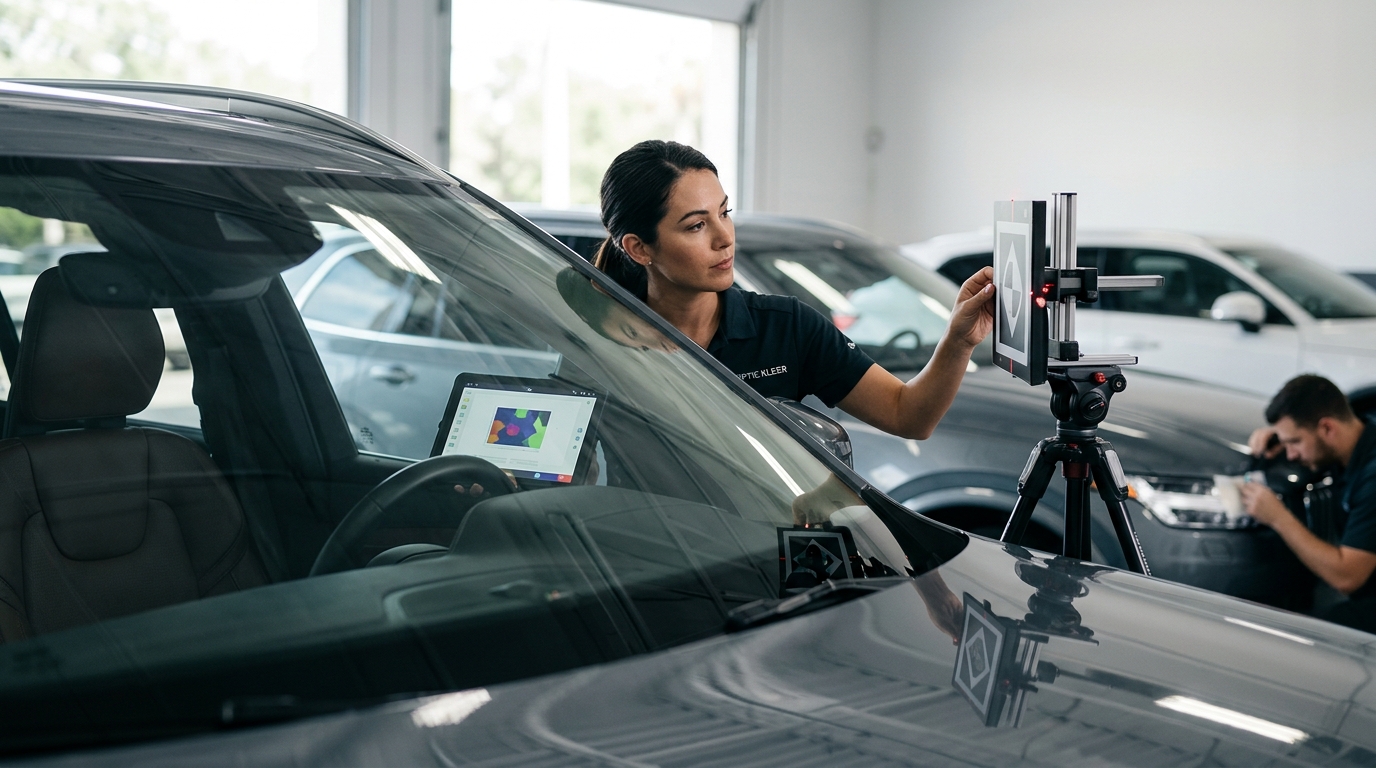
Modern vehicles rely heavily on Advanced Driver Assistance Systems (ADAS) to maintain safety standards. According to the Insurance Institute for Highway Safety, vehicles equipped with forward collision warning systems see a significant reduction in rear-end crashes. However, these systems depend entirely on the precise alignment of cameras and sensors mounted behind the windshield. If the glass is replaced without recalibrating these sensors, the vehicle's safety features may fail to activate when needed. This guide outlines the critical steps to ensure your ADAS system is properly calibrated after a windshield replacement. (About Us Optic Kleer)
Understanding ADAS Dependency
ADAS calibration is not an optional add-on service. It is a mandatory technical procedure required after any windshield replacement that affects the camera's field of view. According to the National Highway Traffic Safety Administration, sensor misalignment can lead to false braking events or a complete failure to detect obstacles. The camera acts as the primary eye for features like lane departure warnings, adaptive cruise control, and automatic emergency braking. Even a millimeter of shift in the glass position can cause the system to misinterpret the road geometry. (Optic Kleer)
Optic-Kleer® ensures that every replacement includes this critical alignment process. Our technicians are trained to handle the complexity of modern sensor arrays, ensuring that your vehicle returns to original equipment manufacturer (OEM) specifications. Failure to calibrate can void your insurance coverage for accidents related to these systems.
Step 1: Verification of Sensor Location
The first step in the calibration process is identifying the specific type of ADAS system installed in your vehicle. Not all vehicles use the same calibration method. Some systems rely on a single camera mounted near the rearview mirror, while others use multiple sensors or radar units integrated into the grille or bumpers. According to the Automotive Service Association, identifying the correct sensor type is crucial for selecting the right calibration equipment.
At Optic-Kleer®, we begin by scanning your vehicle's VIN to determine the exact ADAS configuration. This allows us to prepare the correct diagnostic tools and calibration targets. We verify whether the system requires static calibration (using physical targets in a controlled environment) or dynamic calibration (using road-based algorithms while driving).
Step 2: Preparation and Cleaning
Before any calibration can occur, the new windshield must be installed perfectly. The glass must be clean, free of debris, and properly cured. According to SAE International standards, the adhesive bond must reach a specific strength threshold to prevent any micro-movement of the glass during the calibration process.
Our technicians perform a thorough cleaning of the camera lens area to remove any fingerprints, dust, or urethane residue. Even a small smudge on the lens can cause the calibration software to misread the target patterns. We also ensure that the vehicle is parked on a perfectly level surface. According to Consumer Reports, an uneven surface can skew the calibration data, leading to inaccurate sensor alignment.
Step 3: Static Calibration Process
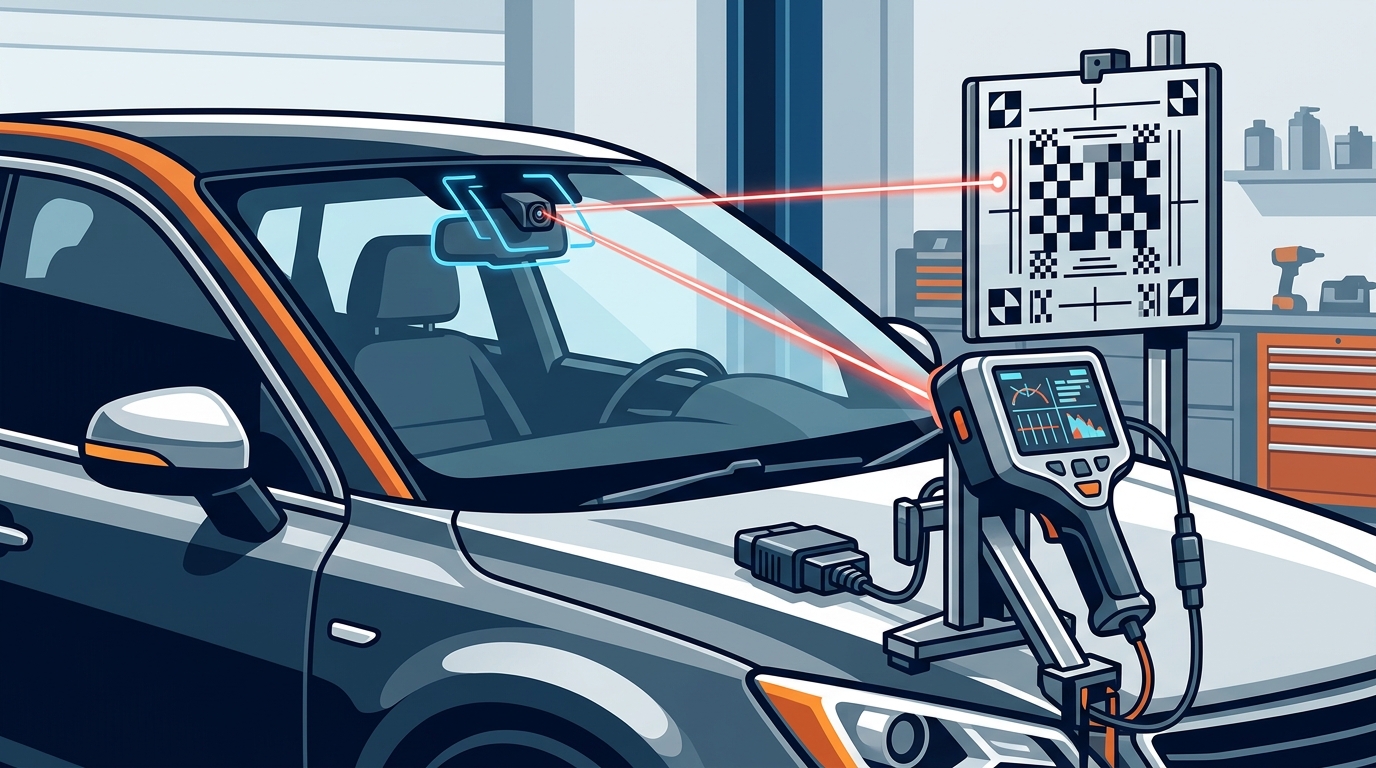
Static calibration is performed in our controlled shop environment. This method is used for most modern vehicles. The process involves the following steps:
Positioning Calibration Targets
We place specialized calibration targets at precise distances and angles from the vehicle. These targets provide reference points for the camera to align with. The distance and angle are determined by the vehicle manufacturer's specifications.
Connecting Diagnostic Tools
Our technicians connect a professional-grade diagnostic tool to the vehicle's OBD-II port. This tool communicates directly with the car's computer to access the ADAS settings. We then initiate the calibration sequence, which guides the camera to adjust its internal parameters to match the target positions.
Monitoring Alignment
During the process, the software monitors the camera's view in real-time. If the alignment is off, the system will prompt the technician to make minor adjustments to the targets or the vehicle's position. This ensures that the camera sees the world exactly as the manufacturer intended.
Step 4: Dynamic Calibration Process
Dynamic calibration is performed while the vehicle is in motion. This method is used for systems that rely on road features for alignment. The process involves:
Driving on a Designated Course
The vehicle is driven on a straight, flat road with clear lane markings. The speed and distance are controlled to meet the manufacturer's requirements. According to the Insurance Institute for Highway Safety, dynamic calibration is essential for systems that need to understand the vehicle's movement relative to the road.
Real-Time Data Collection
As the vehicle moves, the camera captures images of the lane markings. The diagnostic tool analyzes this data to adjust the sensor's angle and focus. This process ensures that the system can accurately detect lanes and other vehicles while driving.
Verification of Functionality
Once the dynamic calibration is complete, the system performs a self-test to verify that all ADAS features are functioning correctly. This includes testing the forward collision warning, lane keep assist, and adaptive cruise control.
Step 5: Post-Calibration Verification
After the calibration process is complete, a final verification is performed. This step ensures that the system is fully operational and safe to drive. According to the National Highway Traffic Safety Administration, post-calibration verification is a critical safety check that prevents potential accidents caused by sensor misalignment.
Our technicians perform a road test to confirm that all ADAS features are working as expected. We also provide you with a calibration report that documents the successful completion of the process. This report serves as proof that your vehicle meets safety standards.
Key Takeaways
- Calibration is Mandatory: ADAS calibration is required after any windshield replacement to ensure safety system functionality.
- Precision Matters: Even minor misalignments can cause critical safety features to fail or trigger false alarms.
- Two Methods Exist: Static calibration uses physical targets in a shop, while dynamic calibration uses road-based algorithms.
- Professional Equipment Needed: DIY calibration is not recommended due to the need for specialized diagnostic tools.
- Optic-Kleer® Expertise: Our technicians are certified and use cutting-edge tooling to guarantee accuracy.
- Documentation Provided: You receive a full calibration report confirming successful completion.
- Safety First: Proper calibration protects you, your passengers, and other drivers on the road.
Frequently Asked Questions
How long does ADAS calibration take?
Static calibration typically takes 30 to 60 minutes, while dynamic calibration can take up to two hours depending on the vehicle make and model. Optic-Kleer® provides accurate time estimates at the point of scheduling.
Can I calibrate my ADAS system myself?
No. ADAS calibration requires specialized diagnostic tools and precise calibration targets. Attempting to calibrate the system without professional equipment can result in inaccurate alignment and safety risks.
What happens if I don't calibrate my ADAS system?
Without calibration, features like lane departure warning and automatic emergency braking may not function correctly. This can lead to false alarms or a complete failure to detect hazards, increasing the risk of an accident.
Does insurance cover ADAS calibration?
In many cases, insurance covers the cost of ADAS calibration as part of the windshield replacement claim. Coverage details vary by policy, and Optic-Kleer® can help verify your benefits.
How often do I need to recalibrate my ADAS system?
Recalibration is typically only needed after a windshield replacement or if the camera is moved. Regular maintenance does not require recalibration unless a sensor is damaged or adjusted.
What is the difference between static and dynamic calibration?
Static calibration uses physical targets in a controlled environment, while dynamic calibration uses road features while driving. The method used depends on the vehicle manufacturer's specifications.
Are Optic-Kleer® technicians certified?
Yes. All Optic-Kleer® technicians are fully trained and certified to industry standards. They are held to strict quality and safety requirements to ensure accurate calibration.
Do you offer mobile ADAS calibration?
Yes. Our mobile service vans operate out of centralized hub locations and can perform static calibration at your home, workplace, or dealership. Dynamic calibration may require a specific road course.
Schedule Your ADAS Calibration Today
Do not compromise your vehicle's safety. Ensure your ADAS system is properly calibrated by visiting an Optic-Kleer® location. Our certified technicians use cutting-edge tooling to guarantee accuracy and safety. Find your nearest Optic-Kleer® location to schedule your service today. We offer both in-shop and mobile services to fit your busy schedule. Contact us at (817) 775-3335 or visit our contact page for more information.