
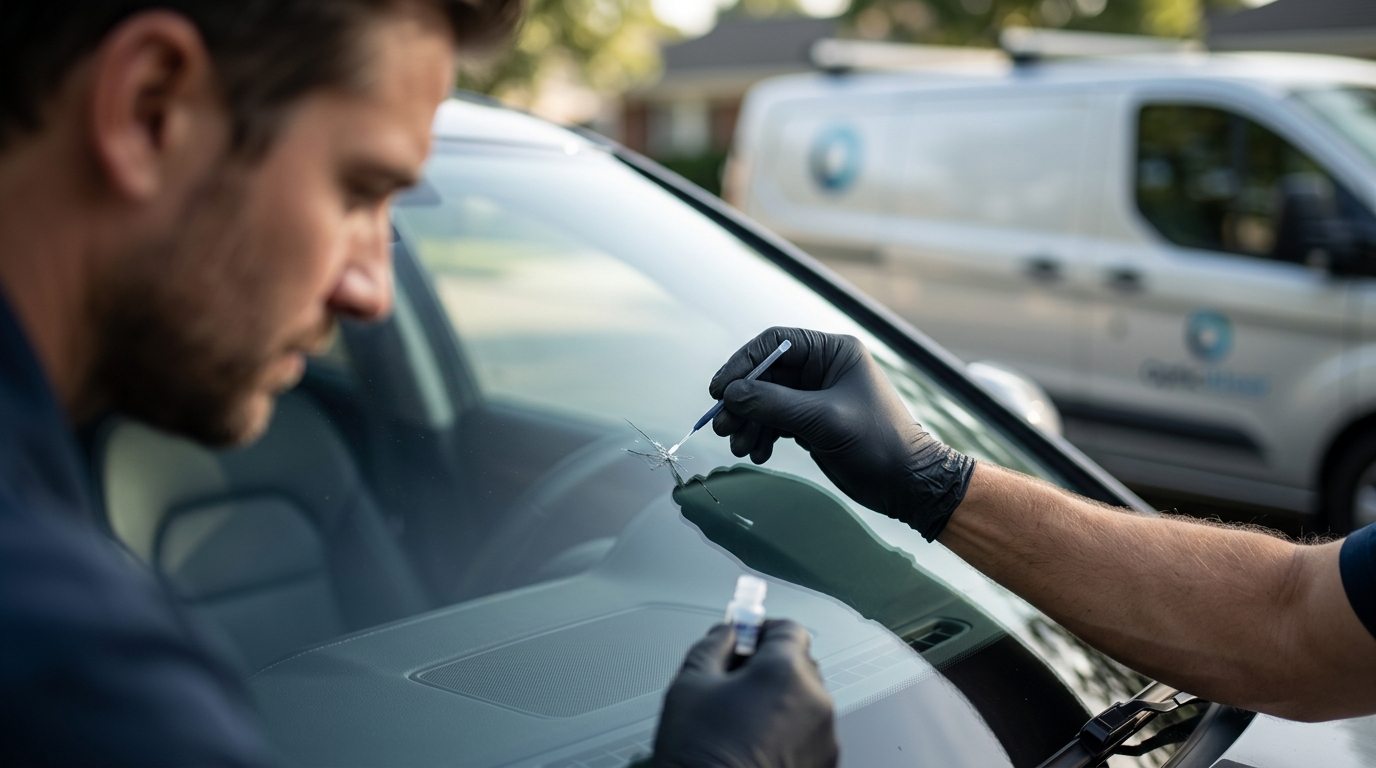
According to the National Highway Traffic Safety Administration, rock chips and small cracks are the most common form of auto glass damage, accounting for millions of incidents annually. Ignoring these minor imperfections is a costly mistake. When moisture and temperature fluctuations penetrate the tiny fracture, the structural integrity of the laminated glass degrades rapidly. Repairing a chip early is not just about aesthetics; it is a critical safety measure that preserves the windshield's role in vehicle structural support and airbag deployment. At Optic Kleer, we have specialized in these precise repairs since 1991, ensuring that drivers can maintain visibility and safety without the expense of a full replacement.
Why Repairing Chips Matters
A windshield is not merely a window; it is a structural component of your vehicle's safety cage. Modern cars rely on the laminated glass to provide up to 45% of the structural rigidity in a frontal collision and up to 60% in a rollover. When a chip forms, it creates a stress point that can propagate into a long crack under the pressure of driving vibrations, temperature changes, or even the force of opening a car door. (Contact Optic Kleer)
Repairing a chip is significantly more cost-effective than replacement. A standard repair costs a fraction of a full windshield replacement and can often be covered entirely by comprehensive insurance with no deductible. Furthermore, keeping the original factory-installed glass ensures that the seal remains intact, preventing leaks and wind noise that often accompany aftermarket replacements. Optic Kleer prioritizes repair over replacement whenever the damage is within acceptable limits, saving you money and preserving your vehicle's original specifications. (About Us Optic Kleer)
Assessing the Damage
Before attempting any repair, you must determine if the damage is actually repairable. Not all chips can be fixed, and attempting to repair a crack that is too long or too deep can result in a failed repair that looks worse than the original damage.
Size and Depth
The general rule of thumb is that chips smaller than a quarter (approximately one inch in diameter) are excellent candidates for repair. If the damage is larger than this, the structural compromise is usually too significant for a resin injection to restore clarity and strength. Depth is also critical; the damage must not penetrate through both layers of the laminated glass. If you can see through to the other side, replacement is the only safe option.
Location of the Damage
The location of the chip determines the feasibility of the repair. Damage in the driver's primary line of sight can often be repaired, but it requires extreme precision to avoid optical distortion. However, chips located at the very edge of the windshield are rarely repairable. The edge is a high-stress area, and repairing it does not restore the structural integrity needed to prevent the crack from spreading. If the chip is near the edge, windshield replacement is the necessary course of action.
The Repair Process
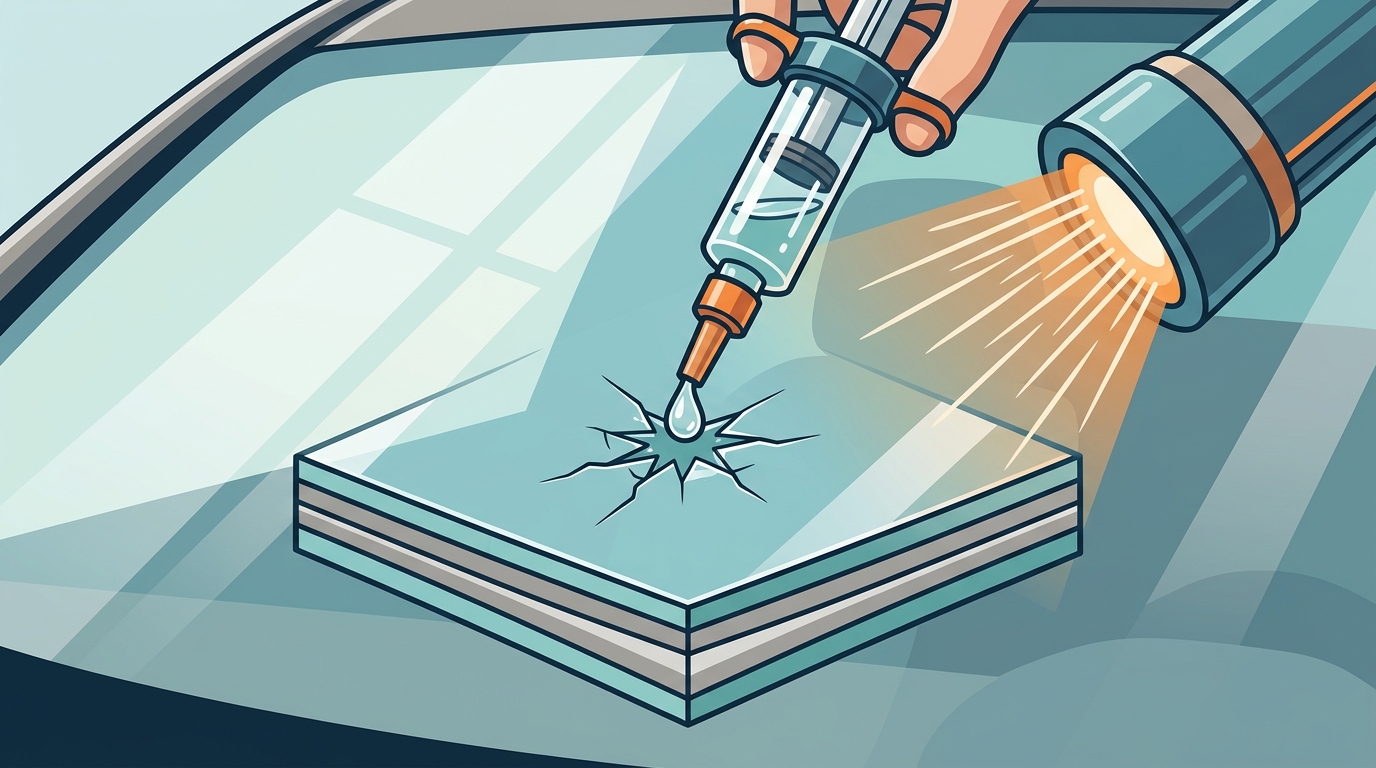
Understanding the technical process helps you appreciate the skill required to perform a high-quality repair. The goal is to restore clarity and prevent the crack from spreading by filling the void with a specialized resin.
1. Cleaning the Damage
The first step is to remove any dirt, moisture, or air from the chip. Technicians use a specialized tool to create a vacuum seal over the damage. This vacuum pulls out contaminants and prepares the fracture for resin injection. If this step is skipped, the resin will not bond properly, leading to bubbles and poor clarity.
2. Resin Injection
A high-clarity, UV-curable resin is injected into the chip under pressure. This resin has a refractive index similar to that of glass, meaning it bends light in the same way as the surrounding windshield. This optical matching is what makes the repair nearly invisible. The pressure ensures the resin penetrates the deepest parts of the fracture.
3. Curing and Finishing
Once the chip is filled, a UV light is used to cure the resin, hardening it instantly. The excess resin is scraped away, and the surface is polished to a smooth finish. This process restores the structural integrity of the glass and prevents further cracking.
Mobile vs. In-Shop Service
Optic Kleer offers both mobile and in-shop services to accommodate your schedule. Both methods utilize the same high-quality materials and certified technicians, ensuring consistent results regardless of location.
| Feature | Mobile Service | In-Shop Service |
|---|---|---|
| Convenience | Performed at your home or work | Requires travel to a location |
| Call-Out Fees | No call-out fees | N/A |
| Environment | Dependent on weather conditions | Controlled climate environment |
| Best For | Chips and minor repairs | Complex replacements or ADAS calibration |
Mobile service is ideal for small chips because it is quick and convenient. Our technicians operate out of centralized hubs and can service customers at homes, workplaces, dealerships, and commercial facilities. For more complex issues, such as full replacements or ADAS calibration, an in-shop visit may be recommended to ensure optimal conditions.
ADAS and Calibration
Modern vehicles are equipped with Advanced Driver Assistance Systems (ADAS) that rely on cameras and sensors mounted behind the windshield. These systems include lane departure warnings, adaptive cruise control, and collision avoidance features. When a windshield is replaced, these cameras must be recalibrated to ensure they function correctly.
While simple chip repairs do not typically require ADAS calibration, it is crucial to understand the distinction. If your vehicle requires a replacement due to extensive damage, ADAS windshield calibration becomes a mandatory safety step. Optic Kleer provides certified calibration services to ensure your vehicle's safety systems perform exactly as designed. Ignoring calibration can lead to false alarms or, worse, a failure of safety features when you need them most.
Key Takeaways
- Act Quickly: Small chips can turn into large cracks within days due to temperature changes and road vibration.
- Cost Savings: Repairing a chip is significantly cheaper than replacement and is often covered with no deductible.
- Structural Integrity: Keeping the original windshield preserves the vehicle's safety cage and airbag deployment mechanics.
- Optic Kleer History: We have been repairing rock chips since 1991, mastering techniques that national chains often overlook.
- No Call-Out Fees: Our mobile service brings expert repair to your location without additional charges.
- Certified Technicians: All our staff are fully trained and certified to industry standards for safety and quality.
- ADAS Awareness: Always verify if ADAS calibration is needed after any glass service on modern vehicles.
Frequently Asked Questions
How long does a windshield chip repair take?
A standard chip repair typically takes 30 to 60 minutes. This includes the time for cleaning, resin injection, curing, and polishing. The actual driving time to and from the service location is not included in this estimate.
Will insurance cover the cost of a chip repair?
In many cases, comprehensive insurance covers chip repairs with zero deductible. Optic Kleer deals directly with most auto insurance companies and can help you verify your benefits before starting the service.
Can I repair a chip myself?
While DIY kits are available, they rarely achieve the optical clarity or structural restoration of a professional repair. Professional technicians use industrial-grade vacuum and pressure tools that are not available to consumers. A failed DIY repair often necessitates a full replacement, costing you more in the long run.
What is the difference between a bullseye and a star chip?
A bullseye chip is circular with a central impact point, resembling a target. A star chip has cracks radiating outward from the center like a star. Both can often be repaired if they are within the size and location limits, but the repair technique may vary slightly to address the specific crack pattern.
Do you offer mobile service for ADAS calibration?
ADAS calibration typically requires a controlled environment and specialized equipment. While we offer mobile repair services, complex calibrations are often performed in our in-shop locations to ensure precision and safety.
How long do I need to wait before driving after a repair?
For chip repairs, the resin cures almost instantly under UV light. You can typically drive your vehicle immediately after the service. However, it is advisable to avoid car washes or high-pressure water on the windshield for at least 24 hours to allow the resin to fully harden.
What is Glass Coating and do I need it?
Glass coating is an optional service that enhances visibility and protects your windshield from water, dirt, and UV damage. It creates a hydrophobic layer that causes water to bead up and roll off, improving safety during rain. Optic Kleer offers this service to extend the life and clarity of your glass.
Schedule Your Repair
Do not let a small chip compromise your safety or your wallet. At Optic Kleer, we provide prompt, professional, and affordable windshield repair services across the country. Our technicians are uniformed, insured, and certified to handle even the most stubborn rock chips. Contact us today to find your nearest location or schedule a mobile service. Visit our Find Your Location page to get started, or call our corporate office at (817) 775-3335. We strive to get you back on the road quickly and safely.