
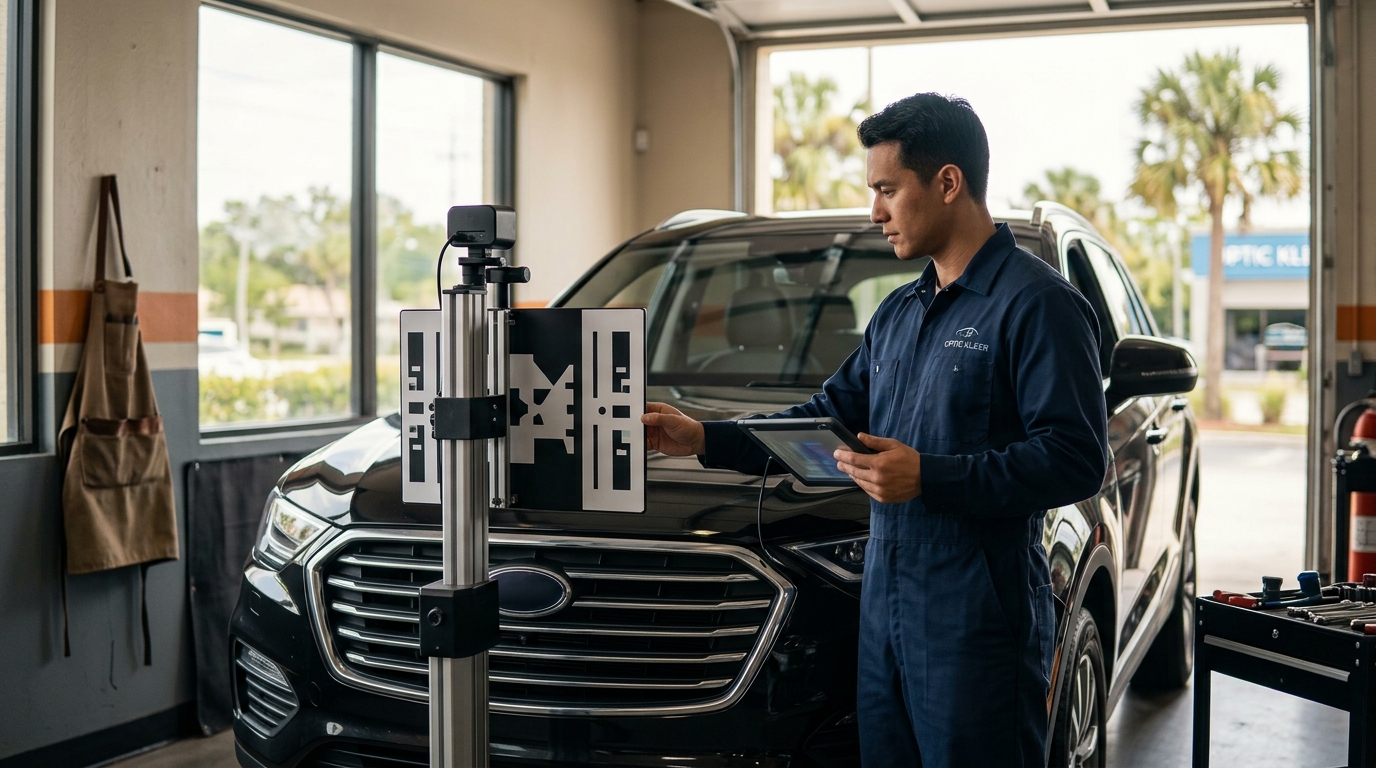
Modern vehicles rely heavily on Advanced Driver Assistance Systems (ADAS) to maintain safety and operational efficiency. According to the Insurance Institute for Highway Safety, vehicles equipped with forward collision warning systems see a 50 percent reduction in rear-end crashes. However, this safety benefit disappears if the system is misaligned. After a windshield replacement, the camera mounted near the rearview mirror must be recalibrated to ensure it functions correctly. This process is not optional; it is a critical safety requirement. (Contact Optic Kleer)
Understanding ADAS and Windshield Integration
ADAS calibration is the process of aligning the vehicle's sensors and cameras to the manufacturer's exact specifications. The National Highway Traffic Safety Administration emphasizes that these systems are designed to prevent accidents, not just mitigate them. The windshield is not merely a piece of glass; it is a structural component that houses the primary camera lens for lane departure warnings, adaptive cruise control, and automatic emergency braking.
When a windshield is removed, the camera's position shifts by millimeters. Even a slight deviation can cause the system to misinterpret lane markings or fail to detect obstacles. This misalignment can lead to false alarms or, worse, a failure to activate safety features when needed. Therefore, professional calibration is essential to restore the vehicle to its original equipment manufacturer (OEM) standards.
Step 1: Pre-Service Assessment and Tooling
The first step in ensuring proper calibration is identifying the specific ADAS type your vehicle requires. Not all systems are calibrated the same way. Some vehicles require only static calibration, while others need dynamic calibration or a combination of both. Technicians must consult the vehicle's service manual to determine the correct procedure.
At Optic-Kleer, we utilize cutting-edge tooling to diagnose the specific needs of your vehicle. Our technicians are trained to identify whether your car uses a forward-facing camera, a stereo camera system, or a combination of radar and lidar sensors. This assessment ensures that the correct calibration targets and software protocols are prepared before the new glass is even installed.
Step 2: Precision Glass Installation
Before calibration can begin, the new windshield must be installed with absolute precision. The adhesive bond must be applied correctly, and the glass must be seated in the exact position defined by the manufacturer. If the glass is misaligned during installation, the subsequent calibration will fail because the physical reference point is incorrect.
Our technicians use specialized urethane and tooling to ensure a clean, efficient, and secure installation. We follow strict curing times to allow the adhesive to set properly. This step is critical because any movement in the glass during the curing process will compromise the structural integrity of the windshield and the accuracy of the ADAS system.
Step 3: Static Calibration Procedures
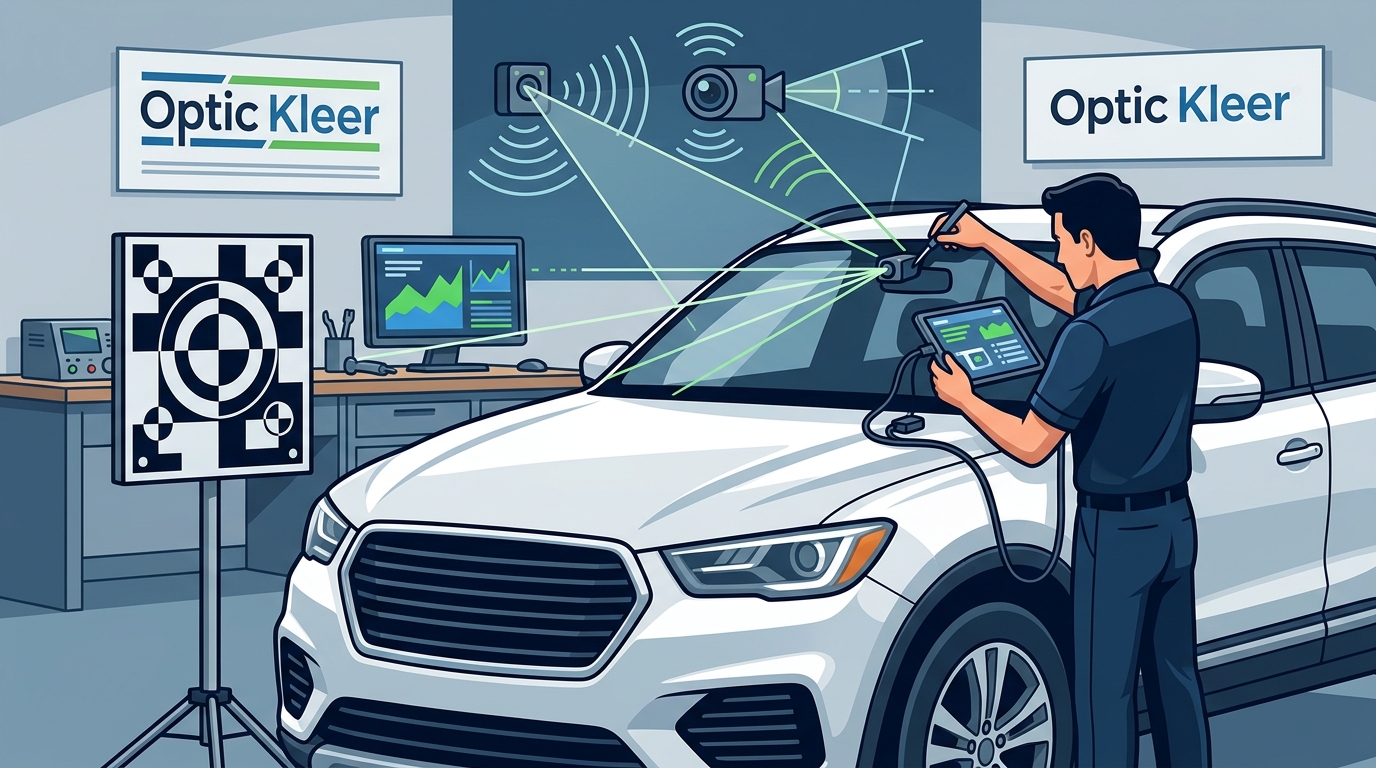
Static calibration is performed while the vehicle is stationary. This method requires a specialized calibration target or board that is placed at a precise distance and angle from the camera. The target contains specific patterns that the camera recognizes to adjust its focus and alignment.
The technician connects a diagnostic tool to the vehicle's onboard computer. The tool communicates with the camera system to initiate the calibration sequence. The system analyzes the target patterns and adjusts the camera's internal parameters to match the OEM specifications. This process is highly technical and requires a controlled environment with proper lighting and level ground.
Step 4: Dynamic Road Calibration
Dynamic calibration involves driving the vehicle on a designated road with specific lane markings. This method is often required for vehicles with stereo camera systems or those that rely on real-time data from the road environment. The vehicle must be driven at a specific speed, typically between 30 and 50 miles per hour, to allow the system to gather sufficient data.
During the drive, the technician monitors the system's response via the diagnostic tool. The camera adjusts its alignment based on the lane markings it detects. This process ensures that the system can accurately interpret the road ahead while the vehicle is in motion. Dynamic calibration is particularly important for features like lane keeping assist and adaptive cruise control.
Step 5: System Verification and Documentation
After the calibration process is complete, the technician must verify that the system is functioning correctly. This involves testing the various ADAS features to ensure they activate as expected. The diagnostic tool will provide a report confirming that the calibration was successful and that the camera is aligned within the acceptable tolerance levels.
At Optic-Kleer, we provide full documentation for every calibration service. This report serves as proof that the vehicle has been restored to OEM specs. It is an important record for your vehicle's history and can be useful for insurance purposes or future service needs. We also ensure that all warning lights on the dashboard are cleared and that the system is ready for immediate use.
Key Takeaways
- ADAS Calibration is Mandatory: Windshield replacement always requires ADAS recalibration to ensure safety systems function correctly.
- Two Calibration Types: Static calibration uses targets in a shop, while dynamic calibration requires driving on marked roads.
- Precision is Critical: Even millimeter-level misalignments can cause safety systems to fail or trigger false alarms.
- Professional Tooling Required: Specialized diagnostic tools and calibration targets are necessary for accurate alignment.
- Documentation Matters: Always request a calibration report to verify that your vehicle meets OEM standards.
- Technician Expertise: Certified technicians understand the specific requirements for different vehicle makes and models.
- Safety First: Proper calibration protects you and your family by ensuring collision avoidance systems work as designed.
Frequently Asked Questions
How long does ADAS calibration take?
Calibration typically takes between one to two hours, depending on whether static, dynamic, or both methods are required. The total service time may vary based on the vehicle make and model.
Can I drive my car immediately after calibration?
Yes, once the calibration is verified and the adhesive has cured, you can drive your vehicle. However, we recommend avoiding high-speed driving for the first hour to allow the system to fully initialize.
Do all windshields require ADAS calibration?
If your vehicle has ADAS features that rely on the windshield camera, then yes, calibration is required after any windshield replacement. This includes most modern vehicles with lane departure warnings or adaptive cruise control.
What happens if ADAS is not calibrated?
Without calibration, safety features may not activate, may activate incorrectly, or may trigger false alarms. This can compromise your safety and lead to additional repair costs.
Does insurance cover ADAS calibration?
Many insurance policies cover ADAS calibration as part of the windshield replacement claim. Coverage details vary by policy, so it is best to check with your provider.
How do I know if my ADAS system is calibrated?
A professional calibration service will provide a diagnostic report confirming the alignment. You can also check for warning lights on your dashboard; if the ADAS light is off, the system is likely functioning correctly.
Can I get ADAS calibration at home?
Dynamic calibration requires driving on specific roads, which can be done via our mobile service. Static calibration requires a controlled environment, so it is typically performed at one of our fixed locations.
Schedule Your Calibration Service
Do not compromise your vehicle's safety with improper calibration. Optic-Kleer offers expert ADAS windshield calibration services across the United States. Our certified technicians ensure your vehicle meets OEM standards, keeping you and your family safe on the road. Find your nearest Optic-Kleer location today to schedule your service. We also offer windshield repair for minor damage and headlight restoration to enhance your vehicle's visibility and performance.